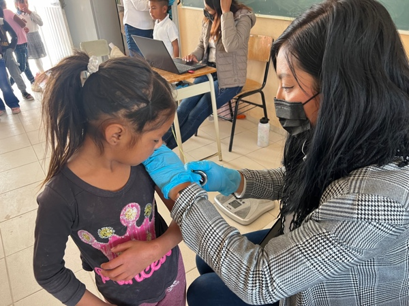
 Hundreds of miles traveled across rural
communities. For 4,137 children. At 41 schools. Feed the Hungry conducts annual health
assessments to monitor growth, identify nutritional concerns, and measure the
impact of our school meal programs. Every year, the Feed the Hungry Nutrition Team
undertakes one of the most important and least visible efforts behind our
mission: evaluating the nutritional health of every child participating in our
school meals program. This year, that effort was completed in record time.
Hundreds of miles traveled across rural
communities. For 4,137 children. At 41 schools. Feed the Hungry conducts annual health
assessments to monitor growth, identify nutritional concerns, and measure the
impact of our school meal programs. Every year, the Feed the Hungry Nutrition Team
undertakes one of the most important and least visible efforts behind our
mission: evaluating the nutritional health of every child participating in our
school meals program. This year, that effort was completed in record time.
Over the course of the school year, our team of six nutritionists, supported by five nutrition interns, supervisors, and drivers, visited 41 schools throughout the rural communities of San Miguel de Allende. Together, they evaluated 4,137 children, collecting important information that helps us understand not only how children are growing, but also how our programs are impacting their health and well-being. While the teams try to measure every single child, it’s not always possible; children can be absent the day that the team comes to measure, or there are parents who prefer not to have their child assessed.
“These evaluations allow us to assess children's nutritional status, growth, and development, detect potential nutrition-related concerns, and understand the impact of the school meals we provide,” explains Eduardo Gonzalez, of Feed the Hungry’s Nutrition Team.
The assessments go far beyond simply recording height and weight. The team measures growth indicators, body composition, and other anthropometric data that provide a more complete picture of each child's nutritional health. Once collected, the information is analyzed, compared to previous years, and used to prepare reports that help identify trends and guide future actions.
Beyond the Scale
While weight and height remain important indicators, today's nutritional evaluations go much deeper. By measuring growth patterns, body composition, and other health indicators, the team can gain a more complete understanding of a child's well-being and identify concerns before they become more serious problems. This information allows Feed the Hungry to monitor progress over time, evaluate the effectiveness of our nutrition programs, and better understand the challenges children face in the communities we serve.
Completing this work across dozens of schools is no small feat.
The team carefully coordinates with school directors and teachers to schedule visits, ensuring that academic activities continue uninterrupted while also achieving strong student participation. Monthly calendars are developed, transportation is organized, and team members collaborate closely to cover every community served by Feed the Hungry.
The Winning Recipe: Teamwork
The secret to finishing the evaluations ahead of
schedule this year was simple: teamwork.
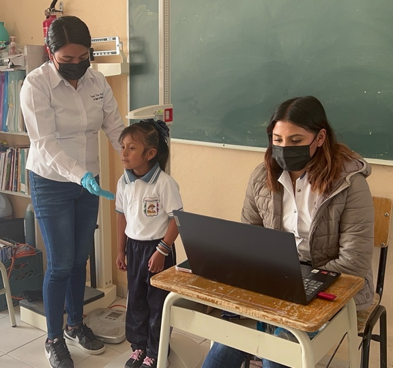 "It was truly a collective effort.
Nutritionists, interns, supervisors, and drivers all worked together to make it
happen," said Veronica Agundis, Executor Director.
"It was truly a collective effort.
Nutritionists, interns, supervisors, and drivers all worked together to make it
happen," said Veronica Agundis, Executor Director.
One of the team's proudest accomplishments was not only completing the evaluations early, but also finishing the nutritional diagnoses in time to share the results with parents through educational workshops. The data collected this year reveals both encouraging progress and important challenges. Cases of undernutrition continue to decline, demonstrating the positive impact of consistent access to nutritious meals and nutrition education. At the same time, the team is seeing a growing number of children with excess weight, reflecting a trend that is becoming increasingly common throughout Mexico and around the world.
One finding that continues to stand out is that both undernutrition and overweight can often be found within the same school, and sometimes even within the same classroom. This highlights an important reality: children's health is influenced not only by the quantity of food available, but also by the quality of their diets and daily habits.
That is why these annual evaluations are so important. By monitoring children's growth year after year, Feed the Hungry can identify concerns early, provide recommendations to families, and develop strategies that support healthier futures. The information also becomes a valuable tool for parents, teachers, and communities, helping everyone work together toward the same goal: healthy children who are ready to learn and thrive. "Being able to follow each child's progress is what motivates us. When we see improvements in their health and habits, we know our work is making a difference," said Claudia Luna, Nutrition Team member.
For the Nutrition Team, helping monitor the health of thousands of children each year is about more than collecting data. It is an opportunity to positively influence lifelong habits and provide guidance that can shape healthier futures, and the impact extends beyond individual children. By bringing professional nutrition services directly into rural communities, Feed the Hungry is helping families access valuable health information that may otherwise be difficult to obtain.
Behind every nutritious meal served is a dedicated team working tirelessly to ensure that children are not only fed today, but also given the opportunity to grow, learn, and build healthier futures.
These evaluations are made possible because of the generosity of donors who understand that fighting hunger is about more than filling plates. It is about helping children reach their full potential.
DID YOU KNOW?
- 4,137 children were evaluated this school year
- 41 schools were visited across rural communities
- 6 nutritionists led the assessments
- 5 nutrition interns provided support
- Thousands of measurements were collected and analyzed
- Results are compared year after year to monitor progress and identify trends
- This year's results will determine the winner of Feed the Hungry's Best Nutritional Status School Award